Referee Communication Systems and the Modern Match
Modern referee communication systems have turned the officiating crew into a live, talking unit rather than four isolated individuals relying only on eye contact and signals. For viewers, that hidden audio network shapes how quickly fouls are given, how VAR incidents are handled, and how smoothly play restarts after contentious moments, even if you never hear a word of it directly.
What a referee communication system actually includes
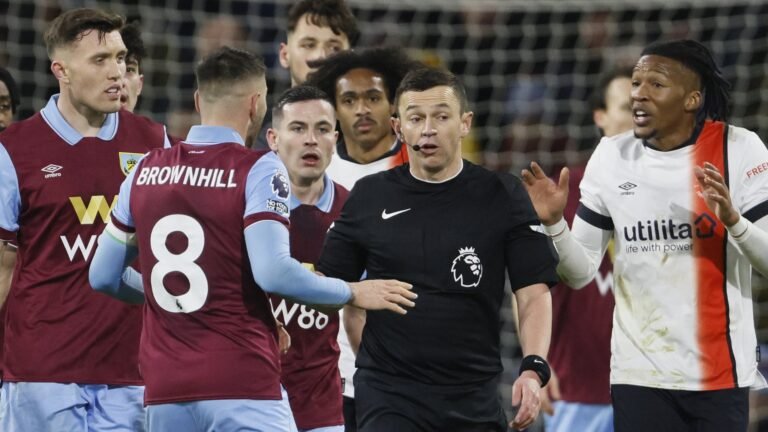
In elite competitions, the communication system is built around wireless headsets and beltpacks that connect all on-field officials and, in many cases, the remote VAR team. Each referee wears a lightweight headset linked to a secure digital intercom so they can speak and listen hands-free while moving at full speed, without shouting across the pitch or relying on touchline sprints to swap information.
Technology providers use secure wireless protocols and dedicated intercom platforms to keep audio clear and stable inside crowded stadiums. Systems like Bolero S or similar solutions combine beltpack units with stadium antennas and a central matrix that routes audio to VAR centres, allowing on-field referees, assistants, fourth officials, and video officials to stay in one continuous conversation throughout the match.
How constant communication changes foul and card decisions
Real-time voice links mean an incident is no longer judged only by what the referee directly in front of it happens to see. As soon as contact occurs, assistants can describe angles, force, and reactions into the headset, while the referee keeps eyes on the next phase of play, ready to apply advantage or stop the game depending on how the move develops.
This affects what you see on screen. Some fouls are now given a second or two after initial contact because an assistant or fourth official has confirmed details in the referee’s ear, even if the on-field official appeared unsure at first glance. Conversely, potential yellow-card tackles sometimes result only in a free-kick when the group concludes over the comms that the force or speed did not meet the threshold for a caution, even if crowd noise suggests otherwise.
Signals that communication is in progress when you ดูบอลสด
When you ดูบอลสด or follow a broadcast, you rarely hear the actual content of referee conversations, but you can see the cues. In VAR leagues, the referee pointing to the ear is the clearest sign that they are in dialogue with the video team about a possible review; during that period, play may continue or be held at the next stoppage until a final decision is reached.
Across a match, you can also watch for how quickly referees react to off-the-ball incidents. Sudden whistles after the ball has moved on often indicate that a member of the crew has just reported a late challenge or off-the-ดูบอลสด changy clash over the headset. Understanding that these decisions are collective rather than solo makes it easier to accept why sanctions sometimes arrive slightly delayed but still feel precise in terms of which player, action, and location are penalised.
Core communication channels and their match impact
Different channels in the communication system handle different tasks, and each leaves a distinct footprint on how the game looks and feels. Knowing how these audio lines are structured helps explain why some situations are resolved instantly while others take longer.
| Communication link | Who is connected | Main purpose during play | Visible impact for viewers |
| On-field crew intercom | Referee, assistants, fourth official | Share foul information, off-the-ball incidents, and game management cues | Faster whistles, coordinated advantage, clearer card targets |
| Referee–VAR audio channel | Referee and video officials in replay centre | Check and review goals, penalties, red cards, and mistaken identity | Periodic delays with ear-pointing gesture and “TV signal” review motion |
| Broadcast / operations comms | VAR centre, TV trucks, stadium ops | Sync decisions with graphics and announcements | On-screen messages and big-screen clips that match decisions |
| System management and support | Technical staff and comms engineers | Maintain audio quality, manage interference and coverage | Rare mid-game headset checks or swaps when issues arise |
For fans, the important distinction is that “talking to VAR” is just one part of a wider network. Most of the time, the system is helping the on-field team stay aligned on unseen details—such as who initiated contact in the box or whether a defender’s touch changed a set-piece decision—without stopping play.
A simple sequence for reading decisions through the lens of comms
Because you cannot hear the conversation, the best way to interpret how the system is being used is to follow a consistent sequence around major incidents. This helps connect body language, gestures, and delays to specific types of communication behind the scenes.
- At the moment of a foul or potential penalty, watch the referee’s eyes and where assistants are looking; if the referee delays the whistle by a second or two, it often means they are waiting for quick input through the headset before committing.
- Once the whistle blows, look for subtle glances toward an assistant or fourth official and whether the referee touches the earpiece; this typically signals that a brief confirmation or clarification is happening before cards or free-kick direction are finalised.
- If the referee points clearly to the ear and holds up play without an immediate restart, assume the VAR team is officially reviewing a potential match-changing incident, even if players continue to argue or appeal.
- When the “TV signal” gesture appears, understand that the referee is about to use pitch-side review or has just received a definitive VAR recommendation, meaning the next decision (penalty, card, goal confirmation) has been reached through combined on-field and video input.
- After the decision, notice how quickly play restarts and how confident the referee appears; smoother restarts with minimal further discussion usually indicate that the crew feels the information they exchanged through the system was clear and complete.
Following this process helps you see controversial moments not as isolated judgments but as the endpoint of a structured, audio-driven collaboration.
How communication systems support match control and player management
Beyond specific decisions, constant audio contact helps referees manage tempo, dissent, and tactical fouling more effectively. Officials can warn each other about brewing flashpoints—running battles between certain players, repeated minor fouls by the same defender, or tension near benches—before these issues boil over into visible flashpoints or mass confrontations.
This proactive information sharing often shows up in well-timed preventive talks: when the referee suddenly pauses to speak to a captain or two players after a series of small fouls, it is frequently because a colleague has advised, “We need to calm this side,” or, “Next one from number X is a card.” For viewers, recognising these interventions as products of crew-wide observation makes the broader game narrative clearer: you see how discipline is being managed as deliberately as tactical pressing.
Where communication systems can still struggle
Even with modern headsets and managed wireless networks, referee communication is not flawless. Stadiums are noisy, radio environments can be crowded, and connectivity has to be robust across long sprints, quick direction changes, and multiple antennas around the pitch. Technology providers emphasise interference control and secure channels, but occasional dropouts, misheard messages, or overlapping talk can still happen.
Human factors matter as much as hardware. Officials must learn concise, clear phrasing and agreed protocols so that urgent information cuts through without creating confusion. Educational materials for referees stress pre-game agreements on who speaks when, what keywords signal certainty versus doubt, and how to avoid “over-talking” during fast transitions, because poor communication—even via good systems—can delay decisions or lead to inconsistent foul thresholds across a match.
Summary
Referee communication systems have transformed modern officiating from a set of isolated viewpoints into a coordinated, constantly talking team linked by secure wireless headsets and VAR audio. For viewers who follow full matches, reading body language, gestures, and the rhythm of delays through this lens makes it easier to understand how fouls, cards, and reviews emerge from group conversation rather than single eyes, sharpening your interpretation of both match flow and the logic behind crucial decisions you see in future games.