Rinnai Tankless Water Heater Guide 2026: Savings & Reviews
Imagine waking up on a chilly morning, stepping into the shower, and never having to worry about the water turning ice-cold. That is the magic of a rinnai tankless water heater. Unlike those old-fashioned big bulky tanks that heat water all day long, these smart systems only heat water when you actually turn on the tap. This “on-demand” style means you get a never-ending supply of hot water for long showers, loads of laundry, and the dishwasher—all at the same time!
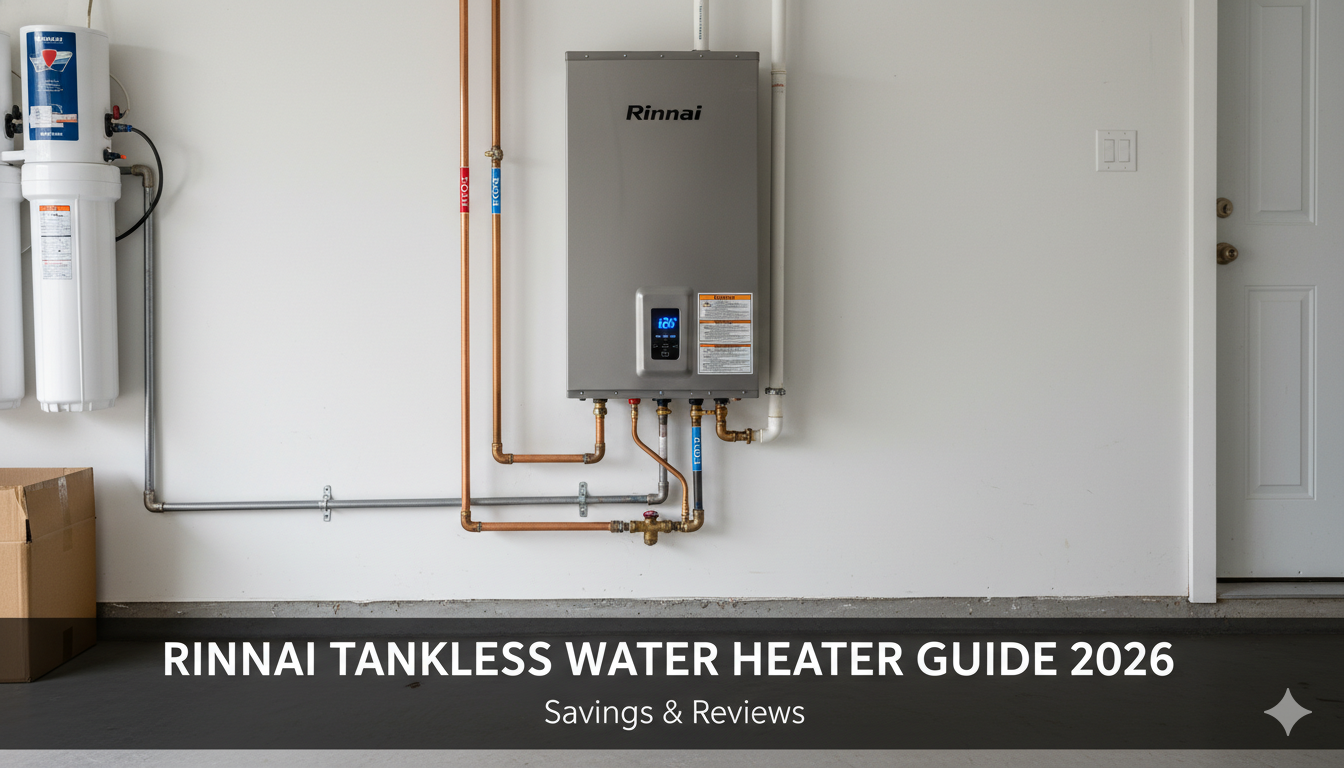
I remember helping a friend switch from a 50-gallon tank to a Rinnai SENSEI model last year. They were tired of the “first person gets the hot shower” rule in their house. After the switch, their whole family could get ready for school and work without a single complaint. It’s not just about comfort, though; it’s about reclaiming space in your garage or closet. These units are about the size of a small suitcase and mount right on the wall.
The Big Benefits of Going Tankless
When you invest in a rinnai tankless water heater, you are looking at a much longer lifespan compared to traditional tanks. Most standard tanks last about 10 years, but a Rinnai unit can easily go for 20 years or more with just a little bit of care. This means you won’t have to worry about a massive tank leaking and flooding your floor every decade. It’s a “set it and forget it” kind of peace of mind that homeowners love.
Another huge win is the energy efficiency. Traditional tanks are like keeping a pot of water boiling on the stove just in case you want tea three hours later. It wastes a lot of gas or electricity! A rinnai tankless water heater only fires up when it senses water moving. This can shave up to 40% off your monthly energy bills. Over time, those savings really add up, helping the unit pay for itself while being better for the planet.
Top Rinnai Models to Consider in 2026
Choosing the right model depends on how much hot water your family uses. The SENSEI RX Series is currently the gold standard. These are “condensing” units, which is a fancy way of saying they are super-efficient. They capture extra heat that usually goes out the vent and use it to pre-heat the incoming cold water. If you have a large family with three or four bathrooms, the Rinnai RX199i is a beast that can handle everything without breaking a sweat.
For smaller homes or apartments, the RE Series (Non-Condensing) is a fantastic, budget-friendly option. It still gives you that endless hot water but at a lower upfront cost. If you hate waiting for the water to get hot at the sink, look for models with a built-in recirculation pump. This feature keeps hot water moving through your pipes so it’s ready the second you turn the handle. No more wasting gallons of water down the drain while you wait!
Quick Comparison Table: Rinnai Models
| Feature | SENSEI RX Series (Condensing) | RE Series (Non-Condensing) |
| Best For | Large Families / High Use | Small to Medium Homes |
| Max Flow Rate | Up to 11.1 GPM | Up to 7.0 GPM |
| Energy Rating | Up to 0.98 UEF (Super High) | ~0.82 UEF (High) |
| Installation | Indoor or Outdoor | Model Specific |
| Key Tech | Bluetooth & Smart Connect | Compact & Affordable |
Understanding Installation Costs
I often get asked if a rinnai tankless water heater is hard to install. If you are replacing an old tank, there is some extra work involved. A professional plumber will need to adjust your gas lines and install special venting. Because these units are so powerful, they need a steady flow of fuel and a safe way to let out exhaust. In 2026, a full professional installation usually costs between $2,000 and $4,500, depending on your home’s setup.
While that might seem higher than a basic tank, remember the “hidden” savings. You get a longer warranty (often 15 years on the heat exchanger) and lower monthly bills. Plus, many local utility companies offer cash rebates or tax credits for installing high-efficiency appliances. Always check with your installer to see if you can get a few hundred dollars back from the government or your gas company!
Why Rinnai Leads the Industry
Rinnai has been around for over 100 years, and they were the first company to start building tankless units right here in the USA. That matters because it means parts are easy to find and local plumbers know exactly how to fix them. When you buy a rinnai tankless water heater, you aren’t just buying a machine; you’re buying into a massive support network. They are ranked #1 in North America for a reason—reliability is their middle name.
Their new Smart Connect technology is a game-changer for 2026. Your plumber can actually connect to the heater using Bluetooth to set it up perfectly. You can even use a smartphone app to monitor your water usage or turn the temperature up for a hot bath. It’s a level of control that old-school water heaters just can’t match. It makes your home feel truly modern and “smart.”
Keeping Your Unit in Tip-Top Shape
Maintenance is the secret sauce to making your rinnai tankless water heater last for two decades. Because it heats water so quickly, minerals like calcium can sometimes build up inside the copper pipes. This is called “scale.” If you live in an area with hard water, I highly recommend a “flush” once a year. It’s a simple process where a cleaning solution is pumped through the unit to dissolve the gunk.
Many of the newer Rinnai models actually have a maintenance alert that flashes a code on the screen when it’s time for a cleaning. If you see Error Code LC or 00, don’t panic! It’s just your heater’s way of saying, “Hey, I need a quick bath to keep running smoothly.” Taking care of these small things early prevents expensive repairs later on and keeps your showers perfectly hot.
Endless Hot Water for a Busy Life
Think about your busiest mornings. The kids need to get ready, you need a shower, and maybe the dishwasher is running from the night before. With a traditional tank, someone is going to end up with a cold surprise. A rinnai tankless water heater solves this “water math” problem forever. It calculates exactly how much heat is needed for the amount of water flowing through it, ensuring every drop is the perfect temperature.
It’s also a much cleaner way to get your water. Old tanks can collect rust and sediment at the bottom over the years. Since a tankless system doesn’t store water, you are always using fresh, clean water straight from the source. It’s better for your skin, your hair, and your appliances. Once you make the switch, it’s honestly hard to imagine going back to a big rusty tank in the corner.
Is It Worth the Switch?
The short answer is: absolutely. If you plan on staying in your home for more than a few years, a rinnai tankless water heater is one of the best upgrades you can make. It increases your home’s value, saves you money every month, and eliminates the stress of “running out of hot water.” It’s an investment in your daily comfort that pays dividends every time you turn on a faucet.
From my experience, the biggest “pro” isn’t even the money saved—it’s the luxury. There is something so nice about knowing you can take a 20-minute shower after a long day without a single worry. If your current water heater is more than 8 years old, now is the perfect time to start looking at Rinnai. Don’t wait for your old tank to burst and cause a mess; be proactive and upgrade to a smarter system today.
Common Questions (FAQs)
1. How long does it take to get hot water?
A rinnai tankless water heater heats water instantly, but it still has to travel through your pipes to the faucet. If you want “instant” hot water, choose a model with a recirculation pump which keeps the lines primed and ready.
2. Can I install a Rinnai heater myself?
It’s really not a DIY project. Because it involves gas lines, high-voltage electricity, and specific venting, you should always hire a certified Rinnai pro. This also ensures your 15-year warranty stays valid!
3. What happens during a power outage?
Since these units use an electronic ignition (no pilot light), they will shut off if the power goes out. However, many homeowners use a small battery backup or a generator to keep their hot water running during a storm.
4. Do I need to upgrade my gas line?
Sometimes! Tankless units need a lot of gas all at once to heat water on demand. A pro will check your meter and pipe size to make sure your rinnai tankless water heater gets the “juice” it needs to perform its best.
5. Are they noisy?
Not at all. Most Rinnai units are about as loud as a quiet dishwasher. If it’s installed in a garage or an outside wall, you probably won’t even hear it running from inside the house.
6. Will it work in cold climates?
Yes! Rinnai units have built-in freeze protection. Even if it’s freezing outside, the unit will pulse tiny amounts of heat to keep the internal pipes from cracking.
Conclusion: Take the Plunge!
Switching to a rinnai tankless water heater is a total game-changer for any household. You get more space, lower bills, and a shower that never quits. Whether you go for the high-tech SENSEI RX or the reliable RE series, you are choosing a brand that stands for quality. It’s time to stop worrying about your old water tank and start enjoying the modern luxury of on-demand heat. Your future self (and your utility bill) will thank you!